• 7 Posts
  • 87 Comments
Joined 2 years ago
cake
Cake day: October 6th, 2024

help-circle

  • I’m pretty sure there’s more used games out on the shelves then there are new ones, and it’s like that in every EB Games I’ve been to in Australia. Maybe people just sell their games here more. As a matter of fact, one of the guys working there today told me that someone just traded in 30 games, and they get quite a few trade-ins on most days.

    I’m not sure if you’re understanding my “theory” correctly. I never said they could be making and selling fake cases, I said they could easily put a used cartridge in the case of a brand new copy. The case already has it’s plastic wrap taken off after all, it’s only a matter of… popping in there. And I’m not actually saying they’re doing this, the problem is the fact that they shouldn’t be unwrapping the plastic, because it allows this sort of thing to happen. I acknowledged that this not likely to happen though. I said that what’s more likely to happen is they simply get the cartridges mixed up by mistake because they store them all in the same drawer as each other. Even with good organisation, mistakes can and will inevitably happen eventually.


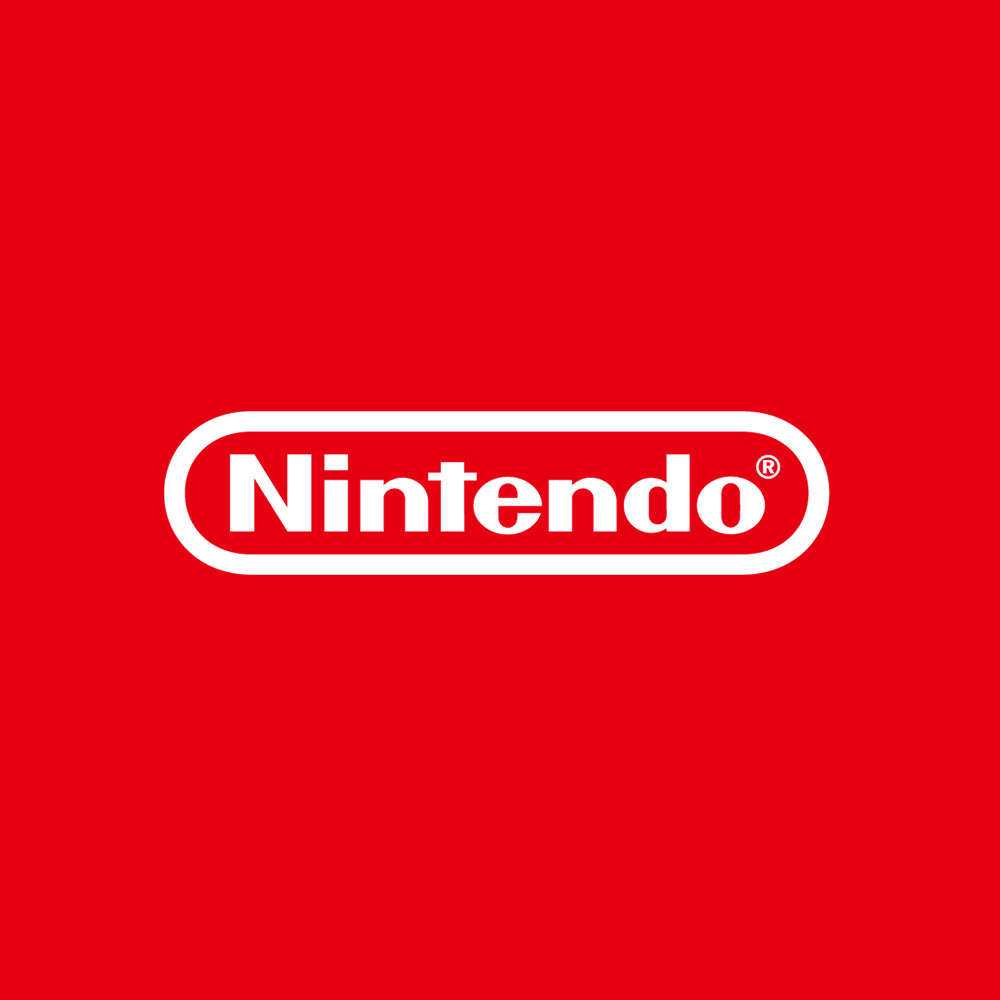
  • This is also the same drawer that they store all the discs for PlayStation & Xbox, too. I’m not personally concerned about the cartridge getting physically scuffed up in the drawer, because I can see that they store them in these little sleeves that keep them protected.

    Unfortunately though, as I’m in a pretty rural area, this is the only game store within a few hour radius, and I prefer supporting actual cash-payments at in-person stores as much as possible. There’s a few other stores just nearby to that EB Games that sell games: JB Hi-Fi, Target, OfficeWorks… but they all do the exact same thing with storing the games in a drawer. I think it’s just standard practice in Australia, or at least Victoria which is the state I live in.


  • Oh wow, I forgot about GAME. I remember a GAME store in Australia near where I used to live prior to where I am now. I was about 5 then, lol. That was 2007. It shut down a very long time ago. I have no memory of how the games were displayed. I didn’t really think about games back then outside of the few games that were on the N64 at my Dad’s house.

    But yeah, the only shop in current-day I can recall (of what I’ve bought from) that only does dummy-cases is Target… or it might be Big W, it’s one of the two.

    Fairly sure we had a policy that once the plastic wrap had been removed it was only returnable as a pre-owned trade-in

    That makes sense to me, but yeah, I can see how it would be annoying if someone were simply to just buy the game, quickly give it a try-out, then return it, get their money back, and then you can only resell it for used price.

    FWIW I imagine genuinely pre-owned stock would get a label on it to not mix it up with new stock

    At EB, the actual game cases that are on the shelf do have differing stickers depending on whether they’re pre-owned or new. Maybe they do stickers for the games they store in the drawer, too. I know that from what I could see of the drawer while the employee has the drawer open, they at the very least have them organised by platform and game name.


  • Though this is outside the realm of the topic, the reason I don’t buy online is because I want to support physical on-site stores of all kinds as much as I can (especially since this is the only dedicated game-store in the area I live. The next-closest EB Games is around 2-3 hours drive away). And by principal I also strictly try to support cash payments as much as possible. Honestly though, if they can deliver it to you online through post with the plastic wrap on, there’s no reason they shouldn’t be able to keep the wrap on at the physical store as well.

    And as others say, it was probably new and just tested at factory as part of QA.

    Yes, you’re all probably right. I’d still like to wait and see first if someone checks a new game. I know there are lots of Nintendo collectors who buy games brand-new and don’t play them until they get around to them, which could be over very long stretches of time. There’s bound to be someone here who can easily help.


  • If it had the shrink wrap on it when you bought it, this is almost certainly from QA at the factory as others have said.

    The game did not come with the wrap. I thought I mentioned this in the post, but just realised now that I only implied it when I said that stores in Australia don’t sell games with wrap on them.

    It is trivial to build a machine that would read carts on the line

    Thanks for letting me know. Others here have been saying this, too, which makes a lot of sense now that I’ve thought more about it.

    If no shrink wrap, then it was either opened at the shop to use as a display case

    It was on a shelf full of Switch 2 games. They are all real cases. Most of the stores I’ve bought games from in Australia sell the actual game cases that are on the shelf, and they are absolutely definitely official cases.

    Or perhaps someone bought it and returned it within the return window if the store allows such a thing, I don’t think typically it would go into pre-owned, but maybe clearance in that scenario.

    That’s maybe possible. I don’t know how they could easily tackle that issue if wanted to try, but that does still present the problem of: if the case is not in the plastic wrap, how do you know they haven’t just put a used copy of the game in a brand new case. Every store I’ve bought games from here in Aus doesn’t have the actual game cart in them. The game carts are all stored in a drawer behind the counter. It sounds like they could easily get mixed up by mistake, even if they have some specific organisation methods they’re supposed to follow.

    Though I think many places don’t really let you return games once they’re opened due to online registration features

    At least when it comes to EB Games, they do let you return used games as long as they weren’t a code-in-a-box. I’ve only ever returned one game before though, but that was like a decade ago so doesn’t really count. I know that they do still allow returns though, because I’ve asked them and they said yes.


  • Other people here have suggested they use a specialised test system. It’s quite obvious to me now that I think about it and makes perfect sense.

    Speaking again from a complete lack of knowledge about how these things work, my assumption would be that a machine is programmed to move and perform actions in a very specific order in the same exact way every single time. I could see though how there could be a little bit of shakiness that could sometimes cause imperfect straightness in the lines, but my assumption (not that I’m saying I’m correct, necessarily) would be that only some of the carts would be left with imperfectly straight lines. If it was shaky all the time, you would think it would greatly increase the risk of damaging something, after all.


  • Okay. Based on what most people are saying to me, I think you’re right the games are tested by humans. It does make more sense the more I think about it. I’m not 100% sure yet that they’re all tested, because like you suggested, it might just be every hundred or so, or whatever the number may be. If that’s the case, I’m totally okay with humans testing the cart by inserting it into something; I guess the problem I have then shifts to the fact that these stores only sell games with the plastic wrap already taken off. If every cartridge has these scratches on it, how the hell can you tell the difference between a real brand new game and a used one? For all we know, they could have intentionally put a used game in a brand-new case to sell a used game for more. Or, perhaps more likely, a simple accidental mix-up. I don’t see how a mixup would be hard. They don’t actually store the games in their cases, they store them in a drawer behind the counter - I think in some sort of little cartridge pouch. I think they’re all labeled, but it seems like a very easy way for them to mistakenly put a used game in a new case. If the plastic wrap was kept on, this wouldn’t be a problem.


  • Well then that still leaves the problem of, if all cartridges have these scratches on them even when wrapped, then how on earth do you know that the game store didn’t just put a good-looking-condition cartridge inside a brand new case to rip you off? Or, perhaps more likely, they simply got the brand new and pre-owned cartridges mixed up and put the wrong copy in the wrong case? When it comes to EB Games and most or all other stores here in Australia, they don’t keep the original cart in it’s case while it’s sitting on the shelf, presumably to prevent theft. They put all the cartridges, usually in a drawer behind the counter. The same was the case with this copy of Metroid Prime 4 I just bought; when I showed them what I was buying, they turned around and opened the drawer to look for a copy of Metroid Prime 4. How do I know that they didn’t get it mixed up with a used copy?

    If I’m buying a brand new game, I should be getting a brand new game.


  • I don’t know how that would work. They make millions of these cartridges, and if a machine were to grip the top of the cartridge in order to push it into a consoles cartridge slot, I don’t think it would be able to fit all the way in. Then there’s also the fact that, how would a machine be able to confirm that the Switch cartridge definitely works? I think you would need human labor for that, and I don’t see how a bunch of human laborers would be able to test millions of cartridges on thousands of consoles. It would just cost too much money.

    Edit: Another thing. It’s not really noticeable in the photo, but these scratches are not perfectly straight lines. They look like they’ve been inserted into the console by human hands. If it was a machine, while I don’t really know anything about manufacturing, you would think that a machine inserting a cart would create perfectly straight-lined scratches every time.


  • Hogwarts Legacy is one example. It only contains a very small portion of the game on cartridge (The tutorial area). The rest you have to download.

    There were lots of other games that did this, I’ve seen plenty of games like this on store shelves, but I just can’t recall any more specific examples at the top of my head, since I usually just mentally ignored the existence of any Switch games when they weren’t released properly on cart.

    More often then not, download-required games were just a download code with no cart, but there are quite a handful of games that released as a cartridge that basically acted like a key. I don’t know if they differed at all in functionality to the Switch 2’s key cards because I never bought one to test, but I believe it seems to work practically identically to the Switch 2’s Game-key cards.


  • I know that. I wasn’t saying they do. But download-only Switch 1 carts do exist, and what I am saying is that there is no requirement for third-parties to label games a certain way on Switch 1 when making the customer aware of the download. On the Switch 2, if it’s a game key card, it has to be labelled the exact same way on every single game at the bottom of the art no matter what, while on Switch 1, how these games are labelled varies from game-to-game, probably due to publishers varying preferences. On Switch 2 it’s all standardised.


  • Yes, sadly both Switch 1 and Switch 2 carts are flash memory. It was the same with the 3DS too, which is already starting to have a handful of games degrade and have issues or outright stop working.

    While this is not yet the case for the Switch 2, the Switch 1 can be homebrewed and then used to rip your own offline digital backup copies of your cartridges. You can then continue to play the physical cartridges until they eventually stop working 15-20 years from now (or from whenever that copy was manufactured)

    On the 3DS, there’s actually a way to ‘charge’ the games with a feature that comes with Godmode9 which is automatically installed only when you homebrew the console. It doesn’t make 3DS carts live forever, but it does SIGNIFICANTLY increase it’s lifespan if you give them a charge once every few years or less. If you have a 3DS, I recommend doing this, as even the cartridges that seem to work fine often have already degraded a bit, and charging a working cart is still just as good.

    Maybe you don’t care about 3DS, but I just wanted to point that out since I’m hoping that someone develops their own equivalent version of this cartridge charging solution for Switch 1 games, and eventually Switch 2 when that gets successfully hacked, too.