

cross-posted from: https://news.abolish.capital/post/49178
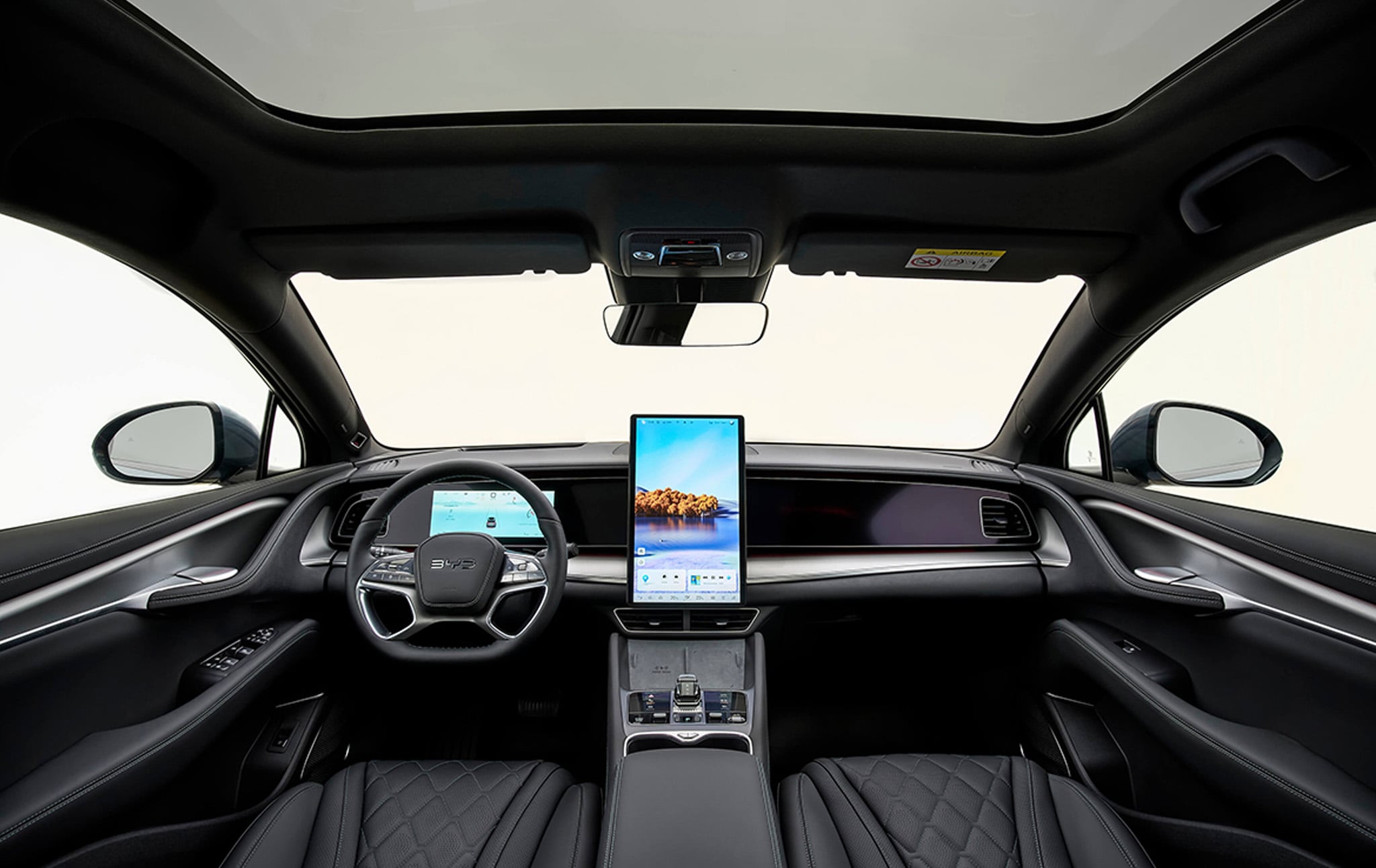
I took my first ride in a Chinese car recently. Not in the U.S., of course, since sky-high tariffs have made them almost impossible to import. I was visiting family in the U.K., and we rented a BYD Sealion SUV. And let me tell you: I saw immediately why American car companies are desperate to have these things kept out of this country. It was elegantly designed, incredibly comfortable, and a smooth ride.
From blog via This RSS Feed.

Yes and no. I’ve said for years that EVs exist to save car companies. They saw the writing on the wall and realized gas engines wouldn’t be viable forever. So I 100% agree with that.
However, a large part of why China’s EVs are so much cheaper is because they use different battery chemistry. American EVs went with lithium ion, because it has amazing energy density. But it is also prone to spontaneously exploding, the batteries age relatively quickly, and the construction requires massive amounts of a relatively rare metal. Something like a third of the cost of a new American EV is simply going towards the batteries. With a $30k car, that means ~$10k is simply going toward the batteries.
But China didn’t use Li+. They went with lithium iron phosphate (LFP) batteries instead. These batteries had much worse energy density originally, (only about half of Li+), but they were easier to manufacture, cheaper because they didn’t require as much lithium, not prone to exploding, and they don’t lose capacity as they age. And so China did the math, and realized that very few people drive more than like a hundred miles at a time, and decided to go with LFP batteries instead of Li+. They were willing to take the reduction in range in return for a much safer, easier, cheaper battery.
And then something interesting happened. As Chinese manufacturers began using LFP batteries, the technology improved. A lot. So now, LFP batteries are closer to 90% of the energy density of Li+ batteries, and they still have none of the drawbacks that Li+ batteries do. If a Li+ EV gets 300 miles to the charge, a comparable LFP battery may get ~270 miles. And since they don’t quickly lose capacity as they age, they actually end up overtaking Li+ batteries after two or three years of regular use. And since those Chinese EVs aren’t pumping tons of lithium into their batteries, they’re able to keep their costs relatively low in comparison to the much more expensive Li+ batteries that American manufacturers have used.
All of this is to say that the battery advances alone will likely be worth the cost. China is quickly shifting towards solar, and batteries are a huge part of that. By adapting LFP technology into their solar systems, they could easily hit 100% renewable energy usage overnight, at a fraction of the cost (and risk) of using Li+ battery banks.