I have the same problem, and often wake up unexpectedly in the middle of the night. Sometimes I can fall back asleep quickly, sometimes I am up for a couple hours, occasionally I won’t get back to sleep at all. Whenever it happens it ruins my energy and mood the following day. It started to impact my energy level to where I couldn’t exercise the way I used to. I’d become fatigued so easily that I could barely make it through my routine. Sometimes I wake up with my joints and muscles feeling so sore that I could swear I was beaten with a stick while sleeping. I started gaining a lot of weight despite no changes to my diet. My mood and brain fog were the worse they’ve ever been. I had maybe one “good” day every month or so.
A coworker and I were sharing our gripes about getting older, and I mentioned my sleep problems and the impact to my quality of life. They had gone through the same thing years ago, and ended up being diagnosed with severe sleep apnea; they recommended I get tested for sleep apnea, too. I talked to my doctor and scheduled a sleep study; turns out I also have severe sleep apnea.
If you have any of the sleep problems like me, then I recommend you talk to your doctor about it. Here’s a few things to keep in mind:
Insist on an in-lab study. Your sleep specialist may try to have you do an at-home test, but those are inaccurate and unreliable. An in-lab study will provide better data.
When you receive your results, make sure they’re evaluated using the American Academy of Sleep Medicine (AASM) guidelines, not the insurance industry guidelines. My first sleep specialist diagnosed me with mild sleep apnea and said I didn’t qualify for treatment. Poor sleep was affecting every aspect of my health and daily life, so I sought a second opinion from an independent sleep specialist who reviewed the same test results and concluded that I had severe sleep apnea; they said insurance industry guidelines underestimate the severity of most apnea patients. Getting that second opinion made a significant difference in receiving the treatment I needed.
If you do end up needing a CPAP, research which masks work best for the position and how often you turn over in your sleep.


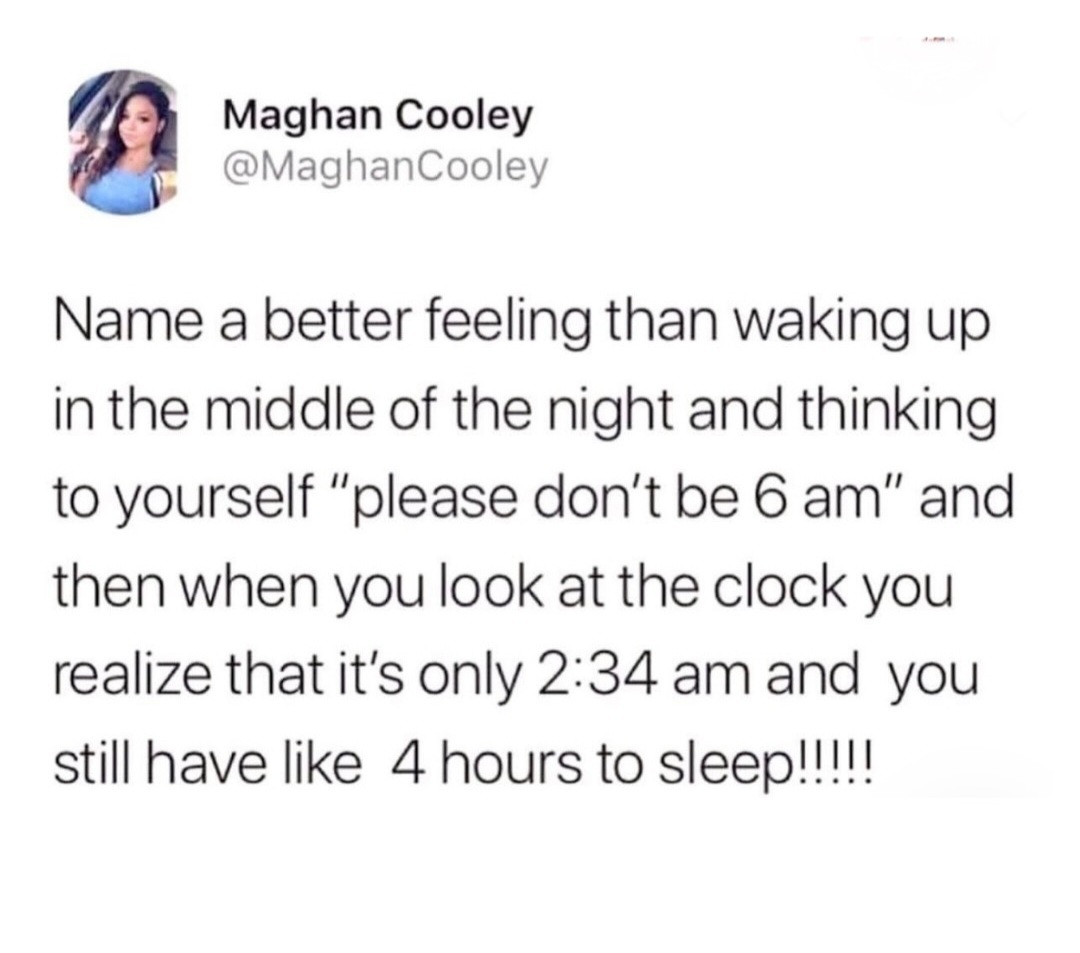
I have the same problem, and often wake up unexpectedly in the middle of the night. Sometimes I can fall back asleep quickly, sometimes I am up for a couple hours, occasionally I won’t get back to sleep at all. Whenever it happens it ruins my energy and mood the following day. It started to impact my energy level to where I couldn’t exercise the way I used to. I’d become fatigued so easily that I could barely make it through my routine. Sometimes I wake up with my joints and muscles feeling so sore that I could swear I was beaten with a stick while sleeping. I started gaining a lot of weight despite no changes to my diet. My mood and brain fog were the worse they’ve ever been. I had maybe one “good” day every month or so.
A coworker and I were sharing our gripes about getting older, and I mentioned my sleep problems and the impact to my quality of life. They had gone through the same thing years ago, and ended up being diagnosed with severe sleep apnea; they recommended I get tested for sleep apnea, too. I talked to my doctor and scheduled a sleep study; turns out I also have severe sleep apnea.
If you have any of the sleep problems like me, then I recommend you talk to your doctor about it. Here’s a few things to keep in mind: