You and I are in agreement; the user I responded to seemed to be implying otherwise.
Edit: I think it’s a bit strong to say it’s “a literal white supremacist talking point.” Your average boomer is going to mistakenly associate it with Voltaire. I think folks that are some level below terminally online have seen one of the many pieces pointing out its origin. Away from the author, it could stand on its own merits which is why “kids with cancer” is a funny response to it. In the US, at least, I haven’t seen a lot of discussion from the white supremacists who run the government on this quote which further makes me question if it’s a literal talking point. Perhaps you are aware of groups that are actively pushing it? If not, it’s a bit more reasonable to say what the first response in this thread said. Be careful.
Is it? I haven’t studied philosophy (but I have studied math) - it seems to me that the Wikipedia article on Truism demands the statement to be true for it to be a truism. But it’s not true though?
The way I see it, the statement can be construed as:
I’m not allowed to criticize X -> X rules over me
But, perhaps because “allowed” and “criticize” are subject to interpretation, there are plenty of groups you will be socially penalized for criticizing (see jokes about kids with cancer below the comment with the quote - I can’t figure out how to link to them). Many countries also protect minorities by making hate speech illegal, and yet those minorities are not ruling the country (though that’s probably exactly what the quote was originally meant to imply). If anything, the truism would be the ‘opposite’ implication:
X rules over me -> I’m not allowed to criticize X
Yet even this isn’t categorically true, like in democracies (which I guess brings in the interpretation of “rule”, as well).
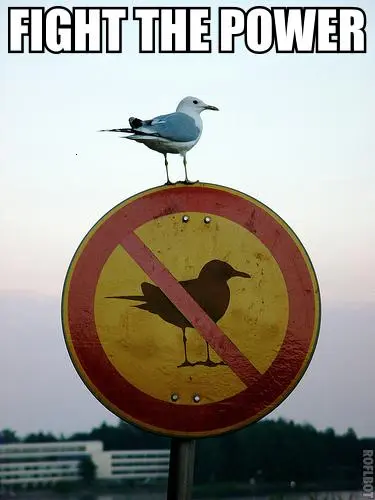
It’s an axiomatic truism. It’s logic is self contained.
Logic self contained within nature’s perfect geometry, a circle.
Why does that preclude it from being in the zeitgeist?
Because it’s literally a white supremacist talking point?
You and I are in agreement; the user I responded to seemed to be implying otherwise.
Edit: I think it’s a bit strong to say it’s “a literal white supremacist talking point.” Your average boomer is going to mistakenly associate it with Voltaire. I think folks that are some level below terminally online have seen one of the many pieces pointing out its origin. Away from the author, it could stand on its own merits which is why “kids with cancer” is a funny response to it. In the US, at least, I haven’t seen a lot of discussion from the white supremacists who run the government on this quote which further makes me question if it’s a literal talking point. Perhaps you are aware of groups that are actively pushing it? If not, it’s a bit more reasonable to say what the first response in this thread said. Be careful.
Not really. I’m just saying the quote isn’t particularly insightful upon analysis, source notwithstanding.
Is it? I haven’t studied philosophy (but I have studied math) - it seems to me that the Wikipedia article on Truism demands the statement to be true for it to be a truism. But it’s not true though?
The way I see it, the statement can be construed as:
I’m not allowed to criticize X -> X rules over me
But, perhaps because “allowed” and “criticize” are subject to interpretation, there are plenty of groups you will be socially penalized for criticizing (see jokes about kids with cancer below the comment with the quote - I can’t figure out how to link to them). Many countries also protect minorities by making hate speech illegal, and yet those minorities are not ruling the country (though that’s probably exactly what the quote was originally meant to imply). If anything, the truism would be the ‘opposite’ implication:
X rules over me -> I’m not allowed to criticize X
Yet even this isn’t categorically true, like in democracies (which I guess brings in the interpretation of “rule”, as well).