This grammatical line and the completely nonsensical line “Around the survivors, a perimeter, create” can both be explained by the fact that these are both imperative (command) sentences, and that doesn’t work for the syntax they tried to give Yoda in the prequels.
In the OT, Yoda’s syntax (word order/sentence structure) was all over the place, with varying degrees of grammaticality, but in the prequels for some reason they decided to standardize his nonstandardness to “move the main verb and anything that follows to the beginning of the sentence, adding ‘do/does’ if necessary” (VP-fronting with dummy-do support where necessary, in linguistic terms). This is at least marginally grammatical for most speakers, but heavily marked, making this way of speaking stand out.
In the vast majority of English sentences, this leaves the subject and any modals/auxiliaries (“helping verbs”) stranded at the end of the sentence. Give (most of) Yoda’s (prequel) sentences their idiosyncratic flair, this does.
Imperatives in English, however, are characterized by the fact that they have implicit (unstated) subjects and no modals/auxiliaries. This means that there’s no way to tell if the VP has been fronted, because the verb would occur at the beginning of the sentence anyway.
There are a few ways to fix this: 1) Just have Yoda say the sentence normally, as happened here, 2) Come up with something that is completely ungrammatical in English, as in the second example above, or 3) Never have Yoda use an imperative, and instead only have him use exhortative constructions like “We must…”, which they often do throughout the prequels.
Basically, because of how they standardized Yoda’s syntax in the prequels, there is effectively no way of getting a true imperative in English that both a) shows a nonstandard word order and b) is not complete word salad.
Source: I wrote a paper on Yoda’s syntax in grad school.
It was just an introductory syntax class paper, so definitely not that interesting theoretically. It started with an exploration of the data, showing that Yoda in the OT uses both significantly more “normal” sentences, and also significantly more varied word order patterns than in the PT, and then proceeded to the (generative, pre-Minimalist) syntactic analysis of the PT syntax (since that was the only data that was sensically analyzable).
That analysis was straightforward, and effectively what I’ve written here: VP-fronting, leaving TP/IP, NegP, and any AuxP stranded, and inserting and inflecting “do” when necessary so that the phi-features in T/I are expressed.
The paper concluded with some interesting/weird data and edge cases, such as the difficulty of creating imperatives in this system, and the oddness of questions for much the same reason as the imperatives (“More to say, have you?”, “Trained as a Jedi, you request for him?”).
Like I said, not too interesting theoretically, but a fun paper for a first-year grad student to write. :)
I don’t know what the most prestigious journal is in linguistics is (and I eill be disappointed if it is not called The Tongue), but I feel this paper deserves to be there.
Edit: apparently they are called:
Linguistics
Syntax and
Journal of Linguistics
The most prestigious journals for general theoretical linguistics are probably Language, Linguistic Inquiry, and maybe Glossa after the editorial pushback against Lingua about a decade ago for its opposition to open research availability (so you’re right that linguists often name their more prestigious journals after words for “tongue”!)
Either way, my first year paper’s analysis would be immediately obvious to any syntactician, and definitely doesn’t belong in a journal.
From the OT: “When 900 years old you reach, look as good, you will not!” has a similar syntactic structure to “Around the survivors, a perimeter, create.”
True one’s a future tense, and one’s an imperative. But they both begin with the prepositional phrase, have the direct object in the middle, and end with the subject-predicate pair (assuming the imperative implies the subject within itself, i.e. “You, create.” And considering the negation as being attached to the verb, i.e. “will not”)
You might say “but the verb is ‘to look as good’, and ‘will’ is the tense modifier,” but if you’re familiar with any germanic language outside of English you’ll understand that grammatically “will” as a modal verb gets treated as the predicate, and “look as good” gets treated as the object to which it applies.
Of course, this doesn’t explain “Concentrate all your fire on the nearest starship.” I guess Yoda was just caught up in the moment…
This is gonna be a long one, but there’s a lot in your comment to unpack.
Note that I specifically excluded the OT from my analysis because it doesn’t show the same systematic syntax that the PT does. But, the core clausal structure of the “900 years” line also perfectly follows my analysis, so I feel comfortable commenting on it here.
First, the “prepositional phrase” (it’s actually a conditional clause acting as an adjunct, not a prepositional phrase) doesn’t really need to be addressed, because sentential adjuncts in English can be positioned relatively freely.
For example: “When I go to the store, I will buy bread”, “I, when I go to the store, will buy bread”, “I will, when I go to the store, buy bread”, and “I will buy bread when I go to the store” are all fine, with perhaps slightly different pragmatic contexts that license them.
This means that adjunct clauses like “when 900 years you reach” (which itself does not follow the usual PT convention, which would be “when reach 900 years you do”) are not very useful for determining main clause sentence structure, and should mostly be ignored in analyses like these except in special cases where it actually has something to say about the structure.
if you’re familiar with any germanic language outside English you’ll understand that grammatically “will” as a modal verb gets treated as the predicate, and “look as good” gets treated as the object to which it applies
I am very familiar with most of the ancient and modern Germanic languages, and this is incorrect for all of them. This is straightforwardly demonstrable by using a language with overt Case, like German. If modals actually got treated as the Case assigner (seemingly what you mean by “predicate” here), and the entire VP was treated as the object, then we would not expect a transitive German sentence with a modal to result in accusative Case assignment on an actual direct object noun in the sentence (because under your analysis the verb would have already received that structural Case).
But, when we check the German data:
“Ich werde den Apfel essen.”
We see that “den Apfel” does in fact take the accusative, which means that “essen” is not acting as the direct object of the sentence.
I’m honestly not sure where you got this idea. You may be getting confused with the “complement” structural relation, because direct objects are (depending on the analysis) complements of their verbal heads, and VPs are also complements of TP/IP (or wherever you put modals in your framework), but it is definitely not the case that VPs “are treated as the object to which it applies” in sentences like this in any Germanic language.
Also, “will” would not be considered a predicate by itself under most generative analyses (though it could be considered a Fregean predicate, but that definition isn’t really useful in syntax, more semantics). Under most generative syntactic analyses, which instead use Aristotelean predicates, the subject of this sentence is “you”, and the predicate is everything else, that is, the entirety of “will not look as good”. It’s true that “will” is in the position where phi-features are normally expressed (again, as visible in German “werde”), but just because conjugation appears to happen at I/T, that doesn’t mean that everything lower in the structure is a direct object.
Maybe you were thinking of multiclausal constructions like “I want to go to the gym”, where [to go to the gym] is an argument of the verb “want”, though whether you’d call it a “direct object” again depends on your framework and assumptions. Either way, that’s not what we’re dealing with in this case (and I can demonstrate that with examples if requested). But check out ECM Constructions for some interesting Case-related phenomena surrounding multiclausal constructions if you’re interested!
Back on topic, we see that Yoda’s line here (aside from the clause structure within the adjunct clause) also perfectly follows my expected pattern (as you also noted in your comment). It’s actually an even better example, because it shows both modal and negation stranding.
From the base word order, “You will not look as good”, we see the expected fronting of the VP and everything lower in the structure, that is “look as good” to the front of the sentence, stranding everything higher in the structure, including the modal and negation, at the end of the string with “you will not”.
I hope this makes sense. Let me know if you have other questions, but it’s possible that further/more detailed explanations may not make much sense without some experience with generative syntax, or that we have different theoretical assumptions of some sort that make our descriptions of the data incompatible.
No, that’s all very interesting. I knew my arguments weren’t seaworthy, I just wanted to provoke a linguist to further exposition. And it worked!
The only bone I’ll pick:
“Ich werde den Apfel essen.”
We see that “den Apfel” does in fact take the accusative, which means that “essen” is not acting as the direct object of the sentence.
Yes, but I was viewing the whole phrase “den Apfel essen” as the DO. So “den Apfel” taking the accusative was really my point. I guess I was viewing the complement structure as one cohesive phrase, as you pointed out.
And I may have used the term ‘predicate’ wrong. I was under the impression that it’s just the verb attached to the subject, so thanks for clearing that up.
But my point stands that the modal “werden” gets conjugated as the main verb (the one attached to the subject, whatever the correct word for that is), while “essen” gets changed back to the infinitive and moves to the end of the sentence to get attached to the DO.
That’s where I was coming at it from, but I apparently didn’t use the correct terminology. So that’s my bad.
Also, sorry for the delayed response. It took a while for my brain to process it and decide what to say. Thanks for the intellectual stimulation!
I see what you mean, and to try to make it a bit clearer what I mean I’ll show you why English syntax and German syntax are considered very similar by syntactic standards, even though German modals/auxiliaries are all the way at the end of the sentence.
The answer relies on the assumption that German and English (and all of the world’s languages’, for that matter) syntax show basically the same structural hierarchy, regardless of how different their word orders are. I won’t get into the reasons for that assumption, because it would take us half of an introductory syntax course to do so, but I will show you the (slightly oversimplified) result.
Note that regardless of the order of the words, the hierarchy of phrases stays the same between both languages. The idea is that the English and German sentences really have this same hierarchy, but that whether each node branches right or left determines the word order, which matters less than it seems to.
So, instead of older Germanic languages having to transition from a German-style syntax to an English-style one by moving seemingly random words to seemingly random places, all they have to do is make a different binary choice at a few of the nodes in the tree, and the English sentences build themselves. This approach has a ton of other benefits that we don’t have anywhere near enough time to get into, but one in particular is useful for the Yoda sentences, in that in all cases you can elegantly determine what Yoda will move to the front of the sentence by cutting off the “Verb Phrase” node and everything that it dominates (that is, everything below it in the tree). So, for “Look as good, you will not”, we have:
Cut off everything VP and below and move it to the front and we get “Look as good, you will not”. This is the exact process that can generate all of the dialogue mentioned in the comment above - draw the tree, cut off VP and everything below it, move it to the front, and you have Yoda-fronting.
Cheers for a fun convo - it’s always great to get to talk about linguistics!

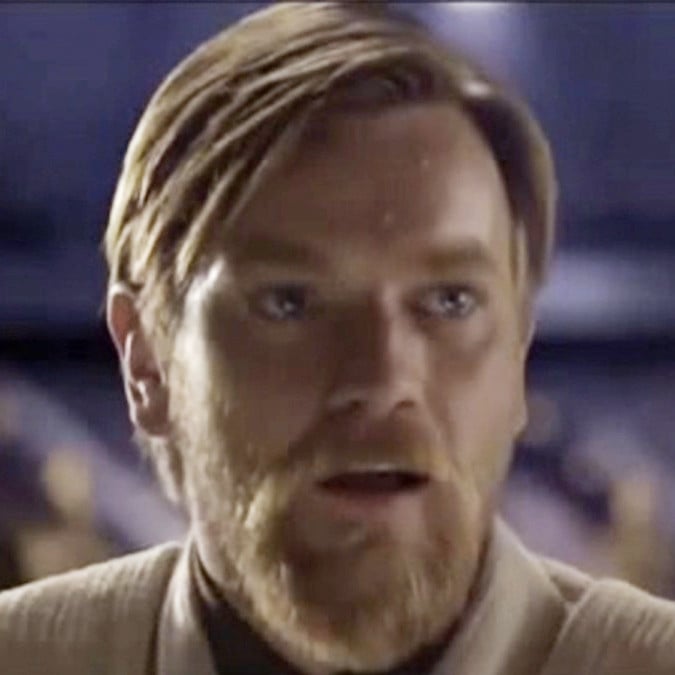

This grammatical line and the completely nonsensical line “Around the survivors, a perimeter, create” can both be explained by the fact that these are both imperative (command) sentences, and that doesn’t work for the syntax they tried to give Yoda in the prequels.
In the OT, Yoda’s syntax (word order/sentence structure) was all over the place, with varying degrees of grammaticality, but in the prequels for some reason they decided to standardize his nonstandardness to “move the main verb and anything that follows to the beginning of the sentence, adding ‘do/does’ if necessary” (VP-fronting with dummy-do support where necessary, in linguistic terms). This is at least marginally grammatical for most speakers, but heavily marked, making this way of speaking stand out.
In the vast majority of English sentences, this leaves the subject and any modals/auxiliaries (“helping verbs”) stranded at the end of the sentence. Give (most of) Yoda’s (prequel) sentences their idiosyncratic flair, this does.
Imperatives in English, however, are characterized by the fact that they have implicit (unstated) subjects and no modals/auxiliaries. This means that there’s no way to tell if the VP has been fronted, because the verb would occur at the beginning of the sentence anyway.
There are a few ways to fix this: 1) Just have Yoda say the sentence normally, as happened here, 2) Come up with something that is completely ungrammatical in English, as in the second example above, or 3) Never have Yoda use an imperative, and instead only have him use exhortative constructions like “We must…”, which they often do throughout the prequels.
Basically, because of how they standardized Yoda’s syntax in the prequels, there is effectively no way of getting a true imperative in English that both a) shows a nonstandard word order and b) is not complete word salad.
Source: I wrote a paper on Yoda’s syntax in grad school.
I would like to read that paper.
It was just an introductory syntax class paper, so definitely not that interesting theoretically. It started with an exploration of the data, showing that Yoda in the OT uses both significantly more “normal” sentences, and also significantly more varied word order patterns than in the PT, and then proceeded to the (generative, pre-Minimalist) syntactic analysis of the PT syntax (since that was the only data that was sensically analyzable).
That analysis was straightforward, and effectively what I’ve written here: VP-fronting, leaving TP/IP, NegP, and any AuxP stranded, and inserting and inflecting “do” when necessary so that the phi-features in T/I are expressed.
The paper concluded with some interesting/weird data and edge cases, such as the difficulty of creating imperatives in this system, and the oddness of questions for much the same reason as the imperatives (“More to say, have you?”, “Trained as a Jedi, you request for him?”).
Like I said, not too interesting theoretically, but a fun paper for a first-year grad student to write. :)
I love that idea. Props to your teachers for running with it.
I had an amazing prof for that class.
I don’t care whether it’s interesting theoretically, it’s interesting to me!
I don’t know what the most prestigious journal is in linguistics is (and I eill be disappointed if it is not called The Tongue), but I feel this paper deserves to be there.
Edit: apparently they are called: Linguistics Syntax and Journal of Linguistics
Imaginative bunch, this is.
The most prestigious journals for general theoretical linguistics are probably Language, Linguistic Inquiry, and maybe Glossa after the editorial pushback against Lingua about a decade ago for its opposition to open research availability (so you’re right that linguists often name their more prestigious journals after words for “tongue”!)
Either way, my first year paper’s analysis would be immediately obvious to any syntactician, and definitely doesn’t belong in a journal.
I appreciate the compliment though. :)
I like your funny words magic man
This one grammars! 😘👌🏼
very purposefully fronting
This doesn’t address the prepositional phrases.
From the OT: “When 900 years old you reach, look as good, you will not!” has a similar syntactic structure to “Around the survivors, a perimeter, create.”
True one’s a future tense, and one’s an imperative. But they both begin with the prepositional phrase, have the direct object in the middle, and end with the subject-predicate pair (assuming the imperative implies the subject within itself, i.e. “You, create.” And considering the negation as being attached to the verb, i.e. “will not”)
You might say “but the verb is ‘to look as good’, and ‘will’ is the tense modifier,” but if you’re familiar with any germanic language outside of English you’ll understand that grammatically “will” as a modal verb gets treated as the predicate, and “look as good” gets treated as the object to which it applies.
Of course, this doesn’t explain “Concentrate all your fire on the nearest starship.” I guess Yoda was just caught up in the moment…
This is gonna be a long one, but there’s a lot in your comment to unpack.
Note that I specifically excluded the OT from my analysis because it doesn’t show the same systematic syntax that the PT does. But, the core clausal structure of the “900 years” line also perfectly follows my analysis, so I feel comfortable commenting on it here.
First, the “prepositional phrase” (it’s actually a conditional clause acting as an adjunct, not a prepositional phrase) doesn’t really need to be addressed, because sentential adjuncts in English can be positioned relatively freely.
For example: “When I go to the store, I will buy bread”, “I, when I go to the store, will buy bread”, “I will, when I go to the store, buy bread”, and “I will buy bread when I go to the store” are all fine, with perhaps slightly different pragmatic contexts that license them.
This means that adjunct clauses like “when 900 years you reach” (which itself does not follow the usual PT convention, which would be “when reach 900 years you do”) are not very useful for determining main clause sentence structure, and should mostly be ignored in analyses like these except in special cases where it actually has something to say about the structure.
I am very familiar with most of the ancient and modern Germanic languages, and this is incorrect for all of them. This is straightforwardly demonstrable by using a language with overt Case, like German. If modals actually got treated as the Case assigner (seemingly what you mean by “predicate” here), and the entire VP was treated as the object, then we would not expect a transitive German sentence with a modal to result in accusative Case assignment on an actual direct object noun in the sentence (because under your analysis the verb would have already received that structural Case).
But, when we check the German data:
“Ich werde den Apfel essen.”
We see that “den Apfel” does in fact take the accusative, which means that “essen” is not acting as the direct object of the sentence.
I’m honestly not sure where you got this idea. You may be getting confused with the “complement” structural relation, because direct objects are (depending on the analysis) complements of their verbal heads, and VPs are also complements of TP/IP (or wherever you put modals in your framework), but it is definitely not the case that VPs “are treated as the object to which it applies” in sentences like this in any Germanic language.
Also, “will” would not be considered a predicate by itself under most generative analyses (though it could be considered a Fregean predicate, but that definition isn’t really useful in syntax, more semantics). Under most generative syntactic analyses, which instead use Aristotelean predicates, the subject of this sentence is “you”, and the predicate is everything else, that is, the entirety of “will not look as good”. It’s true that “will” is in the position where phi-features are normally expressed (again, as visible in German “werde”), but just because conjugation appears to happen at I/T, that doesn’t mean that everything lower in the structure is a direct object.
Maybe you were thinking of multiclausal constructions like “I want to go to the gym”, where [to go to the gym] is an argument of the verb “want”, though whether you’d call it a “direct object” again depends on your framework and assumptions. Either way, that’s not what we’re dealing with in this case (and I can demonstrate that with examples if requested). But check out ECM Constructions for some interesting Case-related phenomena surrounding multiclausal constructions if you’re interested!
Back on topic, we see that Yoda’s line here (aside from the clause structure within the adjunct clause) also perfectly follows my expected pattern (as you also noted in your comment). It’s actually an even better example, because it shows both modal and negation stranding.
From the base word order, “You will not look as good”, we see the expected fronting of the VP and everything lower in the structure, that is “look as good” to the front of the sentence, stranding everything higher in the structure, including the modal and negation, at the end of the string with “you will not”.
I hope this makes sense. Let me know if you have other questions, but it’s possible that further/more detailed explanations may not make much sense without some experience with generative syntax, or that we have different theoretical assumptions of some sort that make our descriptions of the data incompatible.
No, that’s all very interesting. I knew my arguments weren’t seaworthy, I just wanted to provoke a linguist to further exposition. And it worked!
The only bone I’ll pick:
Yes, but I was viewing the whole phrase “den Apfel essen” as the DO. So “den Apfel” taking the accusative was really my point. I guess I was viewing the complement structure as one cohesive phrase, as you pointed out.
And I may have used the term ‘predicate’ wrong. I was under the impression that it’s just the verb attached to the subject, so thanks for clearing that up.
But my point stands that the modal “werden” gets conjugated as the main verb (the one attached to the subject, whatever the correct word for that is), while “essen” gets changed back to the infinitive and moves to the end of the sentence to get attached to the DO.
That’s where I was coming at it from, but I apparently didn’t use the correct terminology. So that’s my bad.
Also, sorry for the delayed response. It took a while for my brain to process it and decide what to say. Thanks for the intellectual stimulation!
I see what you mean, and to try to make it a bit clearer what I mean I’ll show you why English syntax and German syntax are considered very similar by syntactic standards, even though German modals/auxiliaries are all the way at the end of the sentence.
The answer relies on the assumption that German and English (and all of the world’s languages’, for that matter) syntax show basically the same structural hierarchy, regardless of how different their word orders are. I won’t get into the reasons for that assumption, because it would take us half of an introductory syntax course to do so, but I will show you the (slightly oversimplified) result.
Note that regardless of the order of the words, the hierarchy of phrases stays the same between both languages. The idea is that the English and German sentences really have this same hierarchy, but that whether each node branches right or left determines the word order, which matters less than it seems to.
So, instead of older Germanic languages having to transition from a German-style syntax to an English-style one by moving seemingly random words to seemingly random places, all they have to do is make a different binary choice at a few of the nodes in the tree, and the English sentences build themselves. This approach has a ton of other benefits that we don’t have anywhere near enough time to get into, but one in particular is useful for the Yoda sentences, in that in all cases you can elegantly determine what Yoda will move to the front of the sentence by cutting off the “Verb Phrase” node and everything that it dominates (that is, everything below it in the tree). So, for “Look as good, you will not”, we have:
Cut off everything VP and below and move it to the front and we get “Look as good, you will not”. This is the exact process that can generate all of the dialogue mentioned in the comment above - draw the tree, cut off VP and everything below it, move it to the front, and you have Yoda-fronting.
Cheers for a fun convo - it’s always great to get to talk about linguistics!