

The sigh from me is wondering why Andy Weir felt it necessary to use a platform like ‘criticaldrinker’ to go out of his way to trash recent Star Trek.
“They didn’t accept my pitch so, you know, fuck ‘em,” doesn’t really sell me on putting my dollars and eyeballs towards the success of his movie — no matter a great performance by Ryan Gosling or great production values.
Rather tells me why all Weir’s heros are lone-guy-saves-all-on-his-own tropes.
Quoting Weir in the interview:
Later, Marsden brought up the divisive Star Trek: Starfleet Academy, which Paramount+ recently confirmed will end after its already-shot second season.
“I think we can probably safely never talk about it again,” Marsden quipped.
“It’s gone baby!” Weir cheerfully agreed. “It’s all gone.”
Marsden said his advice to Paramount is to de-canonize everything Star Trek from Enterprise onward.
“Okay, you’re a little more severe than I am,” Weir said. “I’ll give you my opinion and I’m just a consumer. I like Strange New Worlds. I think it’s pretty good. I didn’t hate Enterprise. I thought it was kind of weird. Lower Decks I thought was entertaining and fun. All the others, they can go. And here’s another thing: I pitched a Star Trek show to Paramount and I was in Zoom with the showrunners with all the shows and spent a lot of time talking to [executive producer Alex Kurtzman]. I don’t like a lot of the new Trek. He, as a person, is a really nice guy. But at the same time, those shows are shit. He is a nice guy. But they didn’t accept my pitch so, you know, fuck ’em.”
The man has a vested interest to be in the headlines. Media take an interest in him because of the movie. It’s the perfect climate to turn a statement of not much importance into a news headline.
I haven’t listened to the podcast. If anybody has, maybe they can comment on the tone of the conversation. Seeing it just in writing makes him seem a bit petty and adversarial. But the way it happened it could just as well be isolated, throwaway jovial comments where the “fuck them” could be much less pointed and we are left feeling this was a nothing burger.
This is of the same quality journalism as any actor of the fantasy lightsaber universe being asked if they world return to the franchise. Sure, if the script looked promising, said Daisy Ripley. “Ripley to return to Star Wars!” reports niche media site struggling to get eyeballs in front of their ads.
This is the second quote of its kind in a day. The earlier one was about ‘woke’ messaging and how he writes to have no symbolism or underlying meaning in his work.
Going on a media tour is something that people are trained for.
They have their messages. They are ready for the provocations and the traps. And this isn’t Weir’s first Hollywood movie that’s done well.
This specific call out against Star Trek is something that he could have easily stepped about. He didn’t need to go out of his way to alienate a significant potential portion of his audience.
I just read up on the woke comments. What do you find so terrible there? That he writes avoiding an agenda? Or that he criticizes works that plainly have one?
It’s his opinion. I don’t wholly disagree with him. Science fiction often works best when they don’t hang a giant lantern on what the lesson to be learned is. When the politics override good storytelling. Like in Picard S2. ICE is shit and so are climate change denial and the burning mountains around contemporary LA. But to me that came across as preachy, not a great story.
If anything you have to respect the man for not mincing his words at all. That doesn’t mean I agree with him but in this outrage driven world that’s almost a baller move.
I don’t think he has alienated as many people as you suggest. And I haven’t heard enough to be worried. He might be a prick but these two stories are not enough to build a case just yet IMO.
I would argue that very little good science fiction tries to have nothing to say about humanity or the human condition.
There is some very intellectual and intelligent science fiction that takes on and speculates about advanced science and mathematics concepts but these are rarely mainstream and not at all the kind of thing Weir writes.
Some science fiction can be just fun science, engineering or math speculation stories told in prose, but if doesn’t have something to say about ourselves, it’s value isn’t much more than diversion — although diversion and entertainment are valuable in themselves.
Setting aside for now Weir’s rather sour grapes criticism of Star Trek, and stipulating the fact that Star Trek has, from its earliest episodes, had a recurrent pattern of including very transparent and heavy handed allegories to current social and political situations and controversies, let’s consider the general question of what is science fiction for.
Science fiction can be and has been a means of allegorical storytelling, and of pondering the human condition at the individual and the societal level. It tells us about ourselves as much as it tells us about a broader universe.
Huxley and Orwell did this with their dystopias. However, so did hard science fiction greats like Arthur C. Clark. Childhood’s End, Rendezvous with Rama, and 2001: a Space Odyssey were as much about who we are now as what might be out there.
More literary science fiction authors explored themes in psychology and human consciousness from the mid twentieth century on, and high quality science fiction took up those questions in films like The Forbidden Planet.
I didn’t find this kind of reaching about the human condition in either of Weir’s books. I did find them fun rides, the kind of pop fiction that used to be described as “airport” novels — the kind of book people pick up in airport kiosks before a long flight, that are often make into “popcorn movies.”
The science elements in his books are ok, but not astonishing. The level is really middle school, which is why The Martian was reissued in a ‘school edition’ cleaned of the swear words. My own first contact with Weir was our youngest’s ‘school edition’. It wasn’t an overly challenging book for a bright grade 6 student.
What I found in Weir’s writing was a repeating pattern of a lone-wolf individual male hero making some incredibly daft decisions after a catastrophic event that set up his opportunity to MacGyver himself out of the situation. It’s a trope.
It’s not definitive of the genre and it’s not conducive to the ensemble problem solving needed for more complex STEM work in science fiction. And unfortunately Weir’s short fiction has shown that he hasn’t yet mastered the skill of telling stories on a broader canvas.
Fun ride episodes, shows and movies belong in Star Trek and other science fiction too. I’m not saying that they shouldn’t be there. One of the franchise’s strengths has been that it can incorporate the full range of styles. But it’s never been only fun rides and individual heroism or individual MacGyvering. I think we’d see as much scathing criticism if shows tried to be just that.
But back to Weir’s attitude and tone, speaking in his moment of success.
He could have let his work speak for itself, and focused on promoting his film.
Instead he chose to prop up himself by putting down others. I don’t respect that. I don’t see that as having integrity. I see that as being a jerk, and it validates the sense that I got from his books that he doesn’t know himself how to work well with others so he doesn’t write what he doesn’t know.
He didn’t have to shoot his mouth off when baited. Instead, he chose to weigh disingenuously into the ‘culture wars’ by claiming to be above having a message.
He could have chosen at some future moment to drop a mention that he, like many writers had pitched spec scripts to the Star Trek franchise that weren’t taken up for movies or television, that weren’t seen as a fit in the strategic plan of the franchise at the time. That would have likely garnered a lot of positive interest from across the Trek fandom.
Instead, he chose to use his moment to trash the creations of others and, implicitly, the part of the fandom that those shows were written for.
He won’t be getting my money.
I would argue that very little good science fiction tries to have nothing to say about humanity or the human condition.
I’ll take it a step further and say it’s impossible for any fiction, let alone sci-fi.
If you’re writing a story, you have something to say, and to claim otherwise is either a cover-up or profound ignorance of your own work.
Thanks for writing that. It’s quite long but I can see your point. I’m relieved that you didn’t just read two headlines and sent him to the digital gallows. Personally, I don’t reach the same conclusion as you. If you’d say in reply my standards were perhaps lower I would not disagree with you. As I wrote before, this is not enough for me. Weir is not a saint. I heard hin trash talk his own follow-up to the Martian in an interview when Hail Mary came out. He knows he’s not Asimov or Dick. Or Shakespeare.
In terms of what science fiction is best at doing, we don’t appear to be that far apart. Allegorical storytelling is great. That’s why I mentioned Picard S2 where there is none of that. They have characters sit in ICE detention or looking at the burning mountains in 2020 and say this is shit (which, of course, it is). Zero allegory, all in our face virtue signaling. Virtues that I find valid but in a sci-fi story told in a very literal (read: shit) way. Politics overrode good story telling. (Then again, it was the pandy, there are extenuating circumstances.)
You don’t have to answer this; I’m just curious. How is your enjoyment of 90s Trek knowing that Rick Berman was involved? I’d argue he’s a far bigger sob than Weir.
Regarding Rick Berman or other showrunners of a large collaboration, my reaction is more complex, because there were so many others involved in the creation.
While a cinematic feature is a huge collaborative undertaking, Weir sells himself as a kind of lone-wolf type author and so invites reactions on that basis.
There’s also the fact that Berman’s abusive behaviour was kept largely secret while the shows were running. So, my love of the specific shows and episodes was already set before I had the full context.
I’d known from friends in the fandom, with close connections to production, that the early TNG years were generally miserable for all involved but hadn’t heard as much by season four. Berman made the other showrunners be the media frontman, spokespersons for production during most of the 1990s. He wasn’t an eminence gris in reality, but might have well have been for the amount of information available for viewers to know what was actually going on.
Watching now, knowing how the actors and crew were treated, hearing their sides to the story, definitely does impact my experience on rewatching, and I am not as likely to rewatch as frequently as I was.
As another comparison, to someone who made himself out as more of an auteur creator, I find that I really can’t rewatch Josh Whedon productions at this point, especially Buffy.
Maybe it will be for the best that in the future we’ll all create our own holodeck stories. It will rid us of having to separate artists (or co creator/producer) from the work. Reading Berman’s name in the credits is a bit like Weinstein’s in movies. Immediately lessens the enjoyment. Thanks for taking the time to answer.
Another factor in Picard S2 was that the characters - through whom the show is telling you what it thinks - are from a future where those problems don’t exist. That made it feel to me like a lecture from a position of privilege. I really only realized this while watching Quantum Leap (the more recent show; I’ve not yet seen the original), where the characters live in the present day and tend to deal with problems that do still exist in their own time.
Science fiction often works best when they don’t hang a giant lantern on what the lesson to be learned is.
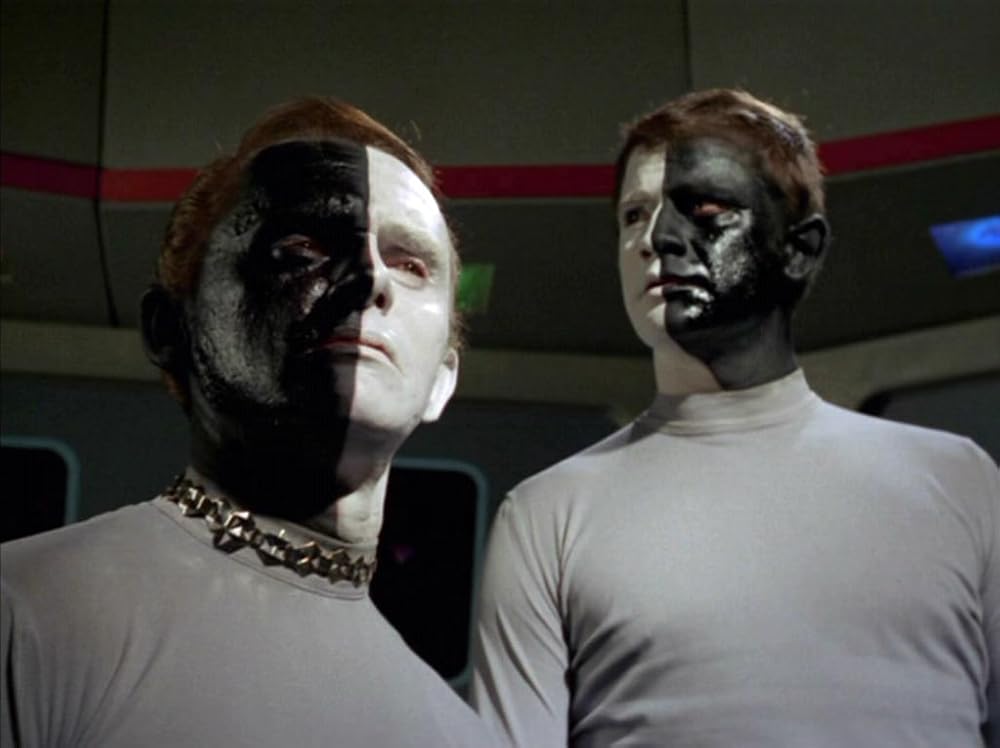
Science fiction often works best when they don’t hang a giant lantern on what the lesson to be learned is.
Probably not the best franchise to be saying that about…

He’s still a huge hypocrite because he’s famous for a story about a human and an alien getting along, and the human putting everything on the line to save said alien. It is literally the “woke nonsense” he’s bitching about. I will give this man and his work no further attention.
Edit: If you don’t think “being kind to aliens instead of being a human supremacist” qualifies as “woke nonsense” the way anti-woke reactionaries define it, I don’t want to hear from you.
It’s hilarious that you’re basically claiming all good deeds under the banner of woke.
Have you seen the modern idiots who screech about woke for literally everything?
i mean that’s basically what the word has devolved into. “anti-woke” is code for “anti-nice” without sounding like skeletor
deleted by creator
He is a huge hypocrite in your opinion. Which I don’t find convincing.
Removed by mod
All modern science fiction TV shows and movies have been heavily influenced by the original Star Trek — except for the current batch of Star Trek shows,'” Weir said
Damn came out swinging. And… Th I agree with him. It’s pretty clear krutzman threw out the guidebook for his shows and it is pretty clear in them. Personally, the only ones I’ve enjoyed are SNW and the third season of Picard, and Lower Decks is on my watch list. They just don’t have the spark.
SNW has a great cast that I think all brought different energies that matched earlier trek shows. They encounter new things and phenomena which challenge them. Importantly too, not every episode is a “zomg the world is ending”. It’s real people making real decisions. I just don’t like the other ones because it feels like “this action replaces the need for writing”.
It’s probably worth noting that this is what he had to say about fiction in general, and Star Trek in particular, a few years ago:
I dislike social commentary. Like… I really hate it. When I’m reading a book, I just want to be entertained, not preached at by the author. Plus, it ruins the wonder of the story if I know the author has a political or social axe to grind. I no longer speculate about all possible outcomes of the story because I know for a fact that the universe of that book will conspire to ensure that the author’s political agenda is validated. I hate that.
Yeah, I didn’t really like the political message aspects of those stories [Stranger in a Strange Land, Brave New World, 1984, The Handmaid’s Tale]. Not that I disagreed with the political point. Just that I didn’t like the political points being there at all. Now, those writers are so good they make compelling and addictive stories despite the political messaging. But that’s often not the case with other stories and other authors.
You’re not mis-reading me, though. I deeply dislike social commentary. For instance, as a lifelong Star Trek fan, it’s always bothered me that there is a presumed “responsibility” within Star Trek shows to talk about social issues. I just want to watch Romulans and the Federation shoot at each other.
Holy shit has he read his own books?
Is it okay, in the context and company of a Trek community, and on the sole basis of that quote, to say that he sounds like a bit of a petty entitled prick?
I’ve never read or watched any of his stuff that I know of, but come on. Somebody rejected a pitch you did, so now you’re going to gloat over the franchise’s misfortune the second you have a mic stuffed in your face?
We seem to share a reaction.
To be fair, I already had sense of Weir as an author was that he was limited in range, and would basically pitch the same kind of lone, MacGyvering hero, to anyone who would buy it — whether or not it was a fit for their show or strategic plan.
It’s the punching down to promote himself, while he’s riding a high, that’s earned my disrespect.
Weir’s reportedly doubled down in other interviews since, saying things along the lines that Star Trek has influenced all of modern science fiction except the more recent era of shows. I’m not going looking for that interview, but it seems that this isn’t a one-off comment on his part.
Ugh. I didn’t watch The Martian because of Matt Damon and his face, but I’m going to continue not watching it because of Weir.
I mean, Martian was somewhat decent but Artemis felt like a slog. Dude is not great at writing women. I think if people aren’t picking you up, maybe… write… better? Sounds like a prick, and he definitely has room for improvement
Not commenting on Andy’s ability to write but, considering the absolute garbage that is actually picked up, using that as a metric of good writing is absurd
Crime 101 author Don Wislow hit back at Weir on X, writing, “Congrats on the success of Project Hail Mary and The Martian. I’m a real fan. But when you have your moment don’t use it to crap on other writers’ work. For the record, Alex Kurtzman is a visionary writer, creator, producer and you owe him an apology… writer to writer.”
Don Wislow must be a comedy author. XD
this whole thing is very ironic considering that Project Hail Mary’s plot is very similar to Discovery Season 4’s. everyone is using this as an excuse to have a pissing match over which is better but it’s the same damn thing!
He likes Strange New Worlds, Lower Decks, and Enterprise. When he says “the rest can go,” he’s talking about… Picard, Discovery and Starfleet Academy?
Unless you believe he watched Prodigy, which I do not, it sounds like he likes about half of New Trek
Andy Weir writes cerebral sci-fi. Star Trek used to be cerebral sci-fi. NuTrek has decided to absolutely avoid being cerebral and focus on antics and VFX glamour.
Weir’s comment on NuTrek comes at no surprised whatsoever, and it goes to show once again how people who are actually into science fiction cannot stand NuTrek.
Cerebral is definitely not the way I would characterize Weir’s writing.
Middle school or YA science fiction is more like it. I first encountered his work when it was recommended for one of our kids.
It’s popular science level stuff. Fun, popcorn stuff.
I do like and read cerebral science fiction.
As an example for contrast, I would suggest the Machineries of Empire trilogy by Yoon Ha Lee, starting with Ninefox Gambit. It’s more on the speculative mathematicians side but it made me think more about topology and probabilistic spaces than I have had to since grad school. All the intellectual fun without the grind.