This really shouldn’t be a hot take but I think the people here will disagree. “Linus unironically did nothing wrong in his linux challenge video” The linux community really shouldnt act like he was using it wrong because its a terrible look.
No reasonable person can pretend there are no issues with linux. Sure you can get good at using linux and not run into these issues but they still exist and people will still run into them and you shouldnt blame the person.
The big problem is Linus decides to pretend to be some “average user” when he isn’t one, and therefore ends up making absolutely bonkers decisions. It was super obvious in the last video because Linus was the only one participating who had major issues, and the only one participating who pretended to know nothing.
If they actually wanted to give Linux an honest shot and see if they can replace windows on one or more of their computers, the format would be entirely different. I think the format would probably start with a Q&A session with a well known Linux YouTuber like Wendel (who they still appear to have a good working relationship with) where they get the initial “here’s what you need to know and what I recommend for the best experience right now” then a check in call after 24 hours, 72 hours, 1 week and 2 weeks where they touch base, discuss pain points and how to alleviate them. Such a format would give an easy transition as well as great advise for the audience, but still present plenty of opportunity to directly see real world pain points and rough edges but instead of those rough edges being “haha Linux bad” they can instead be “here’s how to overcome them” or “this is an area that needs some developer time, anyone want to dive into improving this?” And maybe if they were really feeling crazy they could offer up some bug bounties for the pain points they find! Because that’s the power of open source is if you have the knowhow you can go in and fix it!
I honestly suspect Linus just doesn’t want to change, and that’s why he keeps failing to actually give Linux a shot. This might be an unpopular opinion here but it’s okay if he doesn’t want to change, but he should not be trying to tear down the Linux community for content in the process
I don’t know if I agree that Linus’ decision making can be attributed to role playing as an “average user” so much as it being a case of too much experience hindering him. He’s someone who has been interacting with tech for his entire life and has become very proficient at it within his domain of knowledge. He is definitely someone who is used to tossing the user manual aside when he gets a new device and stumbling his way through until he groks it, and he is using that same approach with Linux. This ends up meaning that he just does stuff that should work the way that he’s used to (i.e. follows the Windows paradigm) and then runs into problems because of it. I think that a lot of his issues basically stem from his ego not permitting him to take a step back to re-learn some of the fundamentals, or least map them onto his Windows-focused mental model.
All that said, Linux distros have varying levels of issues and quirks that have to be learned/dealt with, and there’s nothing inherently wrong with pointing those pain points out. Linus just needs to take a step back and realise that he’s going to have to actually learn something if he wants to be successful.
I think this perspective is insane. They should absolutely not approached switching to linux by leveraging expert linux advice through their youtube contacts. Its fine for Linus to have issues switching to linux, most people do and the video wasnt just Linus having issues it was also Luke and Elijah having a good experience. When it comes to switching to linux Linus is an average user, he doesnt know about the system and is going in with little experience. LTT has gotten these pain points fixed and their video did not come off as “haha linux bad” did you watch it?
As a linux user I want linux to be an approachable thing, I would be pissed if it was presented as a thing that required expert consultation from wendel.
I would be pissed if it was presented as a thing that required expert consultation from wendel.
The thing is, such consultation is also providing the same information to the audience, so its not just for Linus, Luke and Elijah. If you’re diving in without the last 10-30 years of background knowledge of what’s broken, what’s been forked, which forks are worth running, which organizations are in chaos and which keep quietly pushing good code, having someone give you a quick rundown of “here, you’ll want to run this or this distro, use this software for XYZ and right now its best to run games this way, oh and this launcher/game is completely broken on Linux so skip it for now” skips a lot of the friction that Linus is subjecting himself to. And any normal person would ask their Linux-user friend, ask in a relevant discord or ask on a relevant subreddit and get roughly the same thing. The collaboration and consultation provides this same information in a video-friendly manner is the main difference.
Do the viewers learn anything useful by seeing Linus experience a problem, spin theories on the spot while troubleshooting, then cut to finding a forum post explaining a possible fix, and Linus tries it possibly fixing it/possibly not? The viewers certainly learn less than if they saw some of that, then got to see a more experienced creator explain what’s going on, what should have happened and how to fix/prevent it moving forwards. The video stops being just watching people flailing and instead becomes “here’s what they did, here’s what they should have done so you now know don’t have to go through the same thing!”
Its a similar concept as any video where LTT has an enterprise vendor help out with the initial configuration or leans on the enterprise support to fix/explain something. Instead of guessing and potentially misleading the audience of millions, they can get a much more accurate solution/explanation in the same video
My issue is the categorization which in turn paints a picture on a lot of OSes. Call it a Pop OS challenge, or debian challenge, etc. In people’s minds there is windows, ios, and everything else is “linux”. Just leaves a bad taste. Just like in your comment you’re broadly painting “linux” issues as if windows or such doesn’t also run into problems at times (especially with windows updates lately).
In the talk show they do, he talked about how even with the issues he loves Pop OS and even mentioned that very argument–that he has problems with Windows too, and at least this way one of those problems isn’t copilot.
99% of Linux distros behave the same for the most part. There are outliers, like immutables, or NixOS, but whether you’re using Ubuntu, PopOS, Kubuntu, or Mint, your experience with the “linuxness” of your OS will be mostly identical. I’m not talking about things like “the DE looks different”, or the overall “look and feel”, I’m talking about software compatibility, driver compatibility, etc.
You could, I guess, argue if they should say “we’re testing a Debian based distro” instead of “Linux”, but that’s about it.
As already mentioned, Ubuntu/PopOS/Kubuntu/Mint are maybe the four most identical distros in the entire ecosystem. But your point really does hold true even with less-identical distros.
Currently, I have an Ubuntu Server, an Arch PC, and an old laptop “test machine” running Fedora. These are totally different limbs of the Linux family tree, but things pretty much work the same in all of them. The main difference is the package manager: Apt vs Pacman vs DNF. But like, they’re all doing basically the same thing under the hood: checking your installed software against some repository to see if anything needs an update. The actual workflow is pretty much the same with any of them.
After that it’s pretty much just a question of downloading the desktop environment and software you like. Or finding a distro that comes pre-installed with what you want. To make a gaming analogy: linux distros are like Dark Souls classes: starting stats and equipment, but the starting point doesn’t lock you into your you build in the future.
The “primary” distros would be Arch, Debian, Fedora, and NixOS.
Anything that grew out of those (with NixOS being to young for that yet, I think), is going to run basically identically, and since they all grow from the same kernel, at a fundamental level they also behave similarly.
Like, if you switch from macOS to Windows, you see fundamental differences in how things operate. If you switch from Fedora to Arch, you need to learn the new package manager syntax, but the rest is still Linux.
I’m simplifying, but I think you know what I mean.
They are similar overall, yes. Skills and knowledge also transfers between distros. The experience can vary significantly.
If your hardware is correctly detected gets the correct drivers including non free firmware installed, and is correctly configured varies wildly.
For some distros you might have to switch to the iwd instead of networkmanager for wifi to work correctly. You might have to disable powersaving on your wifi or Bluetooth to work correctly. If keyboard backlight works out of the box also varies. Bluetooth audio without cracks, distortion, artifacts might also need tweaking of bluetooth or wifi. Some drivers might only work well with certain kernel versions too.
Software compatibility has gotten a lot better thanks to flatpak and appimage. However having a current version in the package manager instead of having to search for it is nice. Even then you might have to try several options until you find one that works.
The quality of the documentation and the user community also matters a lot in practice. Do they yell at noobs to RTFM or answer welcoming and politely?
For some distros you might have to switch to the iwd instead of networkmanager for wifi to work correctly. You might have to disable powersaving on your wifi or Bluetooth to work correctly (…)
And unless the people doing the “let’s use Linux for however many days” challenge have that specific issue, they won’t learn about it anyway.
On top of that - even if they said “OK, we’re using specifically Mint for 30 days”, and then you go out and try Mint, YOU might end up with massive issues, because your hardware is not supported properly.
They’d have to specify the OS and the hardware if you want a “reproducible experience”.
The quality of the documentation and the user community also matters a lot in practice. Do they yell at noobs to RTFM or answer welcoming and politely?
In my experience, after looking through r/Linux, r/Linux4noobs, or the various Linux communities on Lemmy - you’re going to get yelled at no matter the distro. It’s a matter of timing and luck (who’s currently online, and are they having a good day).
The culture of different distros matters. Lots of people had issues with Manjaro because the devs let their certificates expire. Other distros weren’t affected by that.
On the other hand though, Linus isn’t exactly an ‘average user’, having spent most of his life working in the IT industry. I’m not sure it’s completely fair judging him as if he was a random clueless person either.
I don’t think LTT’s approach is bad exactly. I really just take issue with their argument that “there are thousands of ‘switching to Linux’ videos on YouTube, so we don’t need to cover that ground again.” It’s ignoring the fact that, for better or worse, they have the biggest audience and furthest reach in the space. There’s still room for “we’re approaching this like normies would,” but I really think they need to close it up with “if you want to do this, here’s how to do it right.”
Maybe we have different expectations on roasting levels then. I’m particularly thinking of all the comments making fun of Linus doing a fresh install at a LAN event, picking PopOS again, setting himself up to fail changing all his devices at once to one distro constrained by handheld support, etc. For an honest followup advice video, I’d expect them to consult with someone like Wendell first, so I wouldn’t actually expect it to be a bad video.
Yeah i think all the people criticizing him for picking pop are actually braindead. That criticism should only go towards pop for shipping their cooked new de way to early with no warning label and the linux community for recommending it.
I dont think the lan party thing holds anymore weight. Its fine to install linux at a lan and he would have had just as bad of an experience at home since the issue was with cosmic and left4dead and was not caused by him.
I dont think he switched his devices that was just his reasoning while chosing. He ended up picking bazzite and kubuntu.
Linus installed popOS at a friggin LAN, under pressure, and was rushing to get stuff working then got bent out of shape by comments on protondb about how to get his game to work. His colleagues sat at home, with all the time in the world to figure stuff out and were pleasantly surprised by their experience.
Linux has issues for sure, I run into them daily, but there’s a big difference in giving it a fair shot and saying “could’ve happened on Windows” and making a video as it only happens on Linux. If Linux came on hardware by default, and people had no idea it was Linux, they’d be complaining about their computer, just like people complain about Windows. Linus acts like everything is a Linux issue whenany things are just computer issues you get used to.
There is nothing wrong with installing linux at a LAN. Its quick to install and configure, its actually a layup situation for linux. If Linus had installed it at home he would have had an equally poor experience since the issues were completely out of his control. PopOS shouldnt have labeled Cosmic as production ready and shipped it. Valve should have fixed left4dead2 as its been a known issue for 5 years.


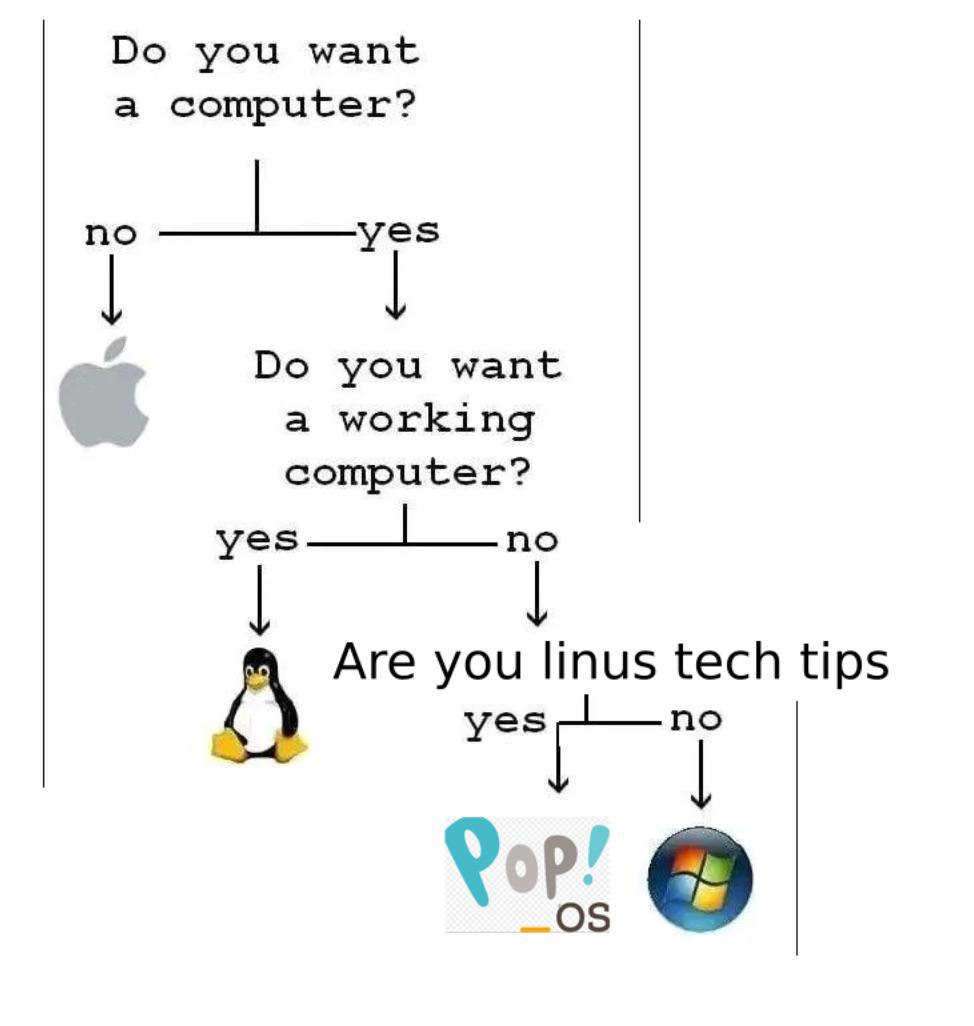
This really shouldn’t be a hot take but I think the people here will disagree. “Linus unironically did nothing wrong in his linux challenge video” The linux community really shouldnt act like he was using it wrong because its a terrible look.
No reasonable person can pretend there are no issues with linux. Sure you can get good at using linux and not run into these issues but they still exist and people will still run into them and you shouldnt blame the person.
The big problem is Linus decides to pretend to be some “average user” when he isn’t one, and therefore ends up making absolutely bonkers decisions. It was super obvious in the last video because Linus was the only one participating who had major issues, and the only one participating who pretended to know nothing.
If they actually wanted to give Linux an honest shot and see if they can replace windows on one or more of their computers, the format would be entirely different. I think the format would probably start with a Q&A session with a well known Linux YouTuber like Wendel (who they still appear to have a good working relationship with) where they get the initial “here’s what you need to know and what I recommend for the best experience right now” then a check in call after 24 hours, 72 hours, 1 week and 2 weeks where they touch base, discuss pain points and how to alleviate them. Such a format would give an easy transition as well as great advise for the audience, but still present plenty of opportunity to directly see real world pain points and rough edges but instead of those rough edges being “haha Linux bad” they can instead be “here’s how to overcome them” or “this is an area that needs some developer time, anyone want to dive into improving this?” And maybe if they were really feeling crazy they could offer up some bug bounties for the pain points they find! Because that’s the power of open source is if you have the knowhow you can go in and fix it!
I honestly suspect Linus just doesn’t want to change, and that’s why he keeps failing to actually give Linux a shot. This might be an unpopular opinion here but it’s okay if he doesn’t want to change, but he should not be trying to tear down the Linux community for content in the process
What do you mean it’s possible for a multi millionaire ceo with a mansion and a private jet to lose touch and not want to change? Preposterous.
Wait, he has a private jet?
I don’t know if I agree that Linus’ decision making can be attributed to role playing as an “average user” so much as it being a case of too much experience hindering him. He’s someone who has been interacting with tech for his entire life and has become very proficient at it within his domain of knowledge. He is definitely someone who is used to tossing the user manual aside when he gets a new device and stumbling his way through until he groks it, and he is using that same approach with Linux. This ends up meaning that he just does stuff that should work the way that he’s used to (i.e. follows the Windows paradigm) and then runs into problems because of it. I think that a lot of his issues basically stem from his ego not permitting him to take a step back to re-learn some of the fundamentals, or least map them onto his Windows-focused mental model.
All that said, Linux distros have varying levels of issues and quirks that have to be learned/dealt with, and there’s nothing inherently wrong with pointing those pain points out. Linus just needs to take a step back and realise that he’s going to have to actually learn something if he wants to be successful.
I think this perspective is insane. They should absolutely not approached switching to linux by leveraging expert linux advice through their youtube contacts. Its fine for Linus to have issues switching to linux, most people do and the video wasnt just Linus having issues it was also Luke and Elijah having a good experience. When it comes to switching to linux Linus is an average user, he doesnt know about the system and is going in with little experience. LTT has gotten these pain points fixed and their video did not come off as “haha linux bad” did you watch it?
As a linux user I want linux to be an approachable thing, I would be pissed if it was presented as a thing that required expert consultation from wendel.
The thing is, such consultation is also providing the same information to the audience, so its not just for Linus, Luke and Elijah. If you’re diving in without the last 10-30 years of background knowledge of what’s broken, what’s been forked, which forks are worth running, which organizations are in chaos and which keep quietly pushing good code, having someone give you a quick rundown of “here, you’ll want to run this or this distro, use this software for XYZ and right now its best to run games this way, oh and this launcher/game is completely broken on Linux so skip it for now” skips a lot of the friction that Linus is subjecting himself to. And any normal person would ask their Linux-user friend, ask in a relevant discord or ask on a relevant subreddit and get roughly the same thing. The collaboration and consultation provides this same information in a video-friendly manner is the main difference.
Do the viewers learn anything useful by seeing Linus experience a problem, spin theories on the spot while troubleshooting, then cut to finding a forum post explaining a possible fix, and Linus tries it possibly fixing it/possibly not? The viewers certainly learn less than if they saw some of that, then got to see a more experienced creator explain what’s going on, what should have happened and how to fix/prevent it moving forwards. The video stops being just watching people flailing and instead becomes “here’s what they did, here’s what they should have done so you now know don’t have to go through the same thing!”
Its a similar concept as any video where LTT has an enterprise vendor help out with the initial configuration or leans on the enterprise support to fix/explain something. Instead of guessing and potentially misleading the audience of millions, they can get a much more accurate solution/explanation in the same video
My issue is the categorization which in turn paints a picture on a lot of OSes. Call it a Pop OS challenge, or debian challenge, etc. In people’s minds there is windows, ios, and everything else is “linux”. Just leaves a bad taste. Just like in your comment you’re broadly painting “linux” issues as if windows or such doesn’t also run into problems at times (especially with windows updates lately).
In the talk show they do, he talked about how even with the issues he loves Pop OS and even mentioned that very argument–that he has problems with Windows too, and at least this way one of those problems isn’t copilot.
This is an extremely bad take.
99% of Linux distros behave the same for the most part. There are outliers, like immutables, or NixOS, but whether you’re using Ubuntu, PopOS, Kubuntu, or Mint, your experience with the “linuxness” of your OS will be mostly identical. I’m not talking about things like “the DE looks different”, or the overall “look and feel”, I’m talking about software compatibility, driver compatibility, etc.
You could, I guess, argue if they should say “we’re testing a Debian based distro” instead of “Linux”, but that’s about it.
As already mentioned, Ubuntu/PopOS/Kubuntu/Mint are maybe the four most identical distros in the entire ecosystem. But your point really does hold true even with less-identical distros.
Currently, I have an Ubuntu Server, an Arch PC, and an old laptop “test machine” running Fedora. These are totally different limbs of the Linux family tree, but things pretty much work the same in all of them. The main difference is the package manager: Apt vs Pacman vs DNF. But like, they’re all doing basically the same thing under the hood: checking your installed software against some repository to see if anything needs an update. The actual workflow is pretty much the same with any of them.
After that it’s pretty much just a question of downloading the desktop environment and software you like. Or finding a distro that comes pre-installed with what you want. To make a gaming analogy: linux distros are like Dark Souls classes: starting stats and equipment, but the starting point doesn’t lock you into your you build in the future.
NixOS is a different beast for sure.
Yes, that was exactly the point I was making.
The “primary” distros would be Arch, Debian, Fedora, and NixOS.
Anything that grew out of those (with NixOS being to young for that yet, I think), is going to run basically identically, and since they all grow from the same kernel, at a fundamental level they also behave similarly.
Like, if you switch from macOS to Windows, you see fundamental differences in how things operate. If you switch from Fedora to Arch, you need to learn the new package manager syntax, but the rest is still Linux.
I’m simplifying, but I think you know what I mean.
They are similar overall, yes. Skills and knowledge also transfers between distros. The experience can vary significantly.
If your hardware is correctly detected gets the correct drivers including non free firmware installed, and is correctly configured varies wildly.
For some distros you might have to switch to the iwd instead of networkmanager for wifi to work correctly. You might have to disable powersaving on your wifi or Bluetooth to work correctly. If keyboard backlight works out of the box also varies. Bluetooth audio without cracks, distortion, artifacts might also need tweaking of bluetooth or wifi. Some drivers might only work well with certain kernel versions too.
Software compatibility has gotten a lot better thanks to flatpak and appimage. However having a current version in the package manager instead of having to search for it is nice. Even then you might have to try several options until you find one that works.
The quality of the documentation and the user community also matters a lot in practice. Do they yell at noobs to RTFM or answer welcoming and politely?
Did you just say Ubuntu four times?
And unless the people doing the “let’s use Linux for however many days” challenge have that specific issue, they won’t learn about it anyway.
On top of that - even if they said “OK, we’re using specifically Mint for 30 days”, and then you go out and try Mint, YOU might end up with massive issues, because your hardware is not supported properly.
They’d have to specify the OS and the hardware if you want a “reproducible experience”.
In my experience, after looking through r/Linux, r/Linux4noobs, or the various Linux communities on Lemmy - you’re going to get yelled at no matter the distro. It’s a matter of timing and luck (who’s currently online, and are they having a good day).
That was kind of my point.
Kind of, but some distros are still much more stable than others.
It’d be like only ever trying windows ME or vista, rather than 2000 or 7.
You’re still getting ‘the windows experience’, but you happen to be using one of the least stable options available. Much like choosing pop vs debian.
Depends on the hardware config mostly.
See? Here’s the problem - I installed PopOS on my old EliteBook to check it out and it’s been absolutely marvellous. Zero issues whatsoever.
At the same time, at work we have laptops that choke and panic under Debian.
The culture of different distros matters. Lots of people had issues with Manjaro because the devs let their certificates expire. Other distros weren’t affected by that.
It’s not a problem that’s going to pop-up during a “let’s use XYZ for ## days” challenge.
It literally did last time Linus tried due to a missing dependency for steam in the PoP!_OS repo.
On the other hand though, Linus isn’t exactly an ‘average user’, having spent most of his life working in the IT industry. I’m not sure it’s completely fair judging him as if he was a random clueless person either.
I don’t think LTT’s approach is bad exactly. I really just take issue with their argument that “there are thousands of ‘switching to Linux’ videos on YouTube, so we don’t need to cover that ground again.” It’s ignoring the fact that, for better or worse, they have the biggest audience and furthest reach in the space. There’s still room for “we’re approaching this like normies would,” but I really think they need to close it up with “if you want to do this, here’s how to do it right.”
Why would we want a “heres how to switch to linux right” from ltt? Even the big linux youtubers get roasted for making those videos incorrectly.
That video wouldn’t be for us. Also, the videos as they are are getting roasted heavily already, so it’s not like that’s gonna stop them.
Its pretty well received. I think only the fringe parts of the linux community who love linux but dont understand it are getting upset.
Maybe we have different expectations on roasting levels then. I’m particularly thinking of all the comments making fun of Linus doing a fresh install at a LAN event, picking PopOS again, setting himself up to fail changing all his devices at once to one distro constrained by handheld support, etc. For an honest followup advice video, I’d expect them to consult with someone like Wendell first, so I wouldn’t actually expect it to be a bad video.
Yeah i think all the people criticizing him for picking pop are actually braindead. That criticism should only go towards pop for shipping their cooked new de way to early with no warning label and the linux community for recommending it.
I dont think the lan party thing holds anymore weight. Its fine to install linux at a lan and he would have had just as bad of an experience at home since the issue was with cosmic and left4dead and was not caused by him.
I dont think he switched his devices that was just his reasoning while chosing. He ended up picking bazzite and kubuntu.
Weren’t people giving him commands, and he was running them without understanding what they did? Or am I thinking of somebody else?
Aha you were probably thinking of every one that is learning Linux ever born?
That’s what the average Linux noob or casual user does.
Linus installed popOS at a friggin LAN, under pressure, and was rushing to get stuff working then got bent out of shape by comments on protondb about how to get his game to work. His colleagues sat at home, with all the time in the world to figure stuff out and were pleasantly surprised by their experience.
Linux has issues for sure, I run into them daily, but there’s a big difference in giving it a fair shot and saying “could’ve happened on Windows” and making a video as it only happens on Linux. If Linux came on hardware by default, and people had no idea it was Linux, they’d be complaining about their computer, just like people complain about Windows. Linus acts like everything is a Linux issue whenany things are just computer issues you get used to.
There is nothing wrong with installing linux at a LAN. Its quick to install and configure, its actually a layup situation for linux. If Linus had installed it at home he would have had an equally poor experience since the issues were completely out of his control. PopOS shouldnt have labeled Cosmic as production ready and shipped it. Valve should have fixed left4dead2 as its been a known issue for 5 years.
Sure there is: if you’re larping the average Joe.